



University Equivalency System
Internal university system for course equivalency requests, built around a strict multi-stage approval workflow with a complete audit trail.
Architecture Overview
graph LR
    A[Student] -->|Draft to Submitted| B[Application]
    B --> C[Employee triage]
    C -->|Forward| D[Committee review]
    D -->|Accept| E[Committee admin]
    D -->|Decline / Return| F[Notes required]
    F --> B
    E -->|Finalise| G[PDF decision]
    B & C & D & E --> H[(Audit trail)]
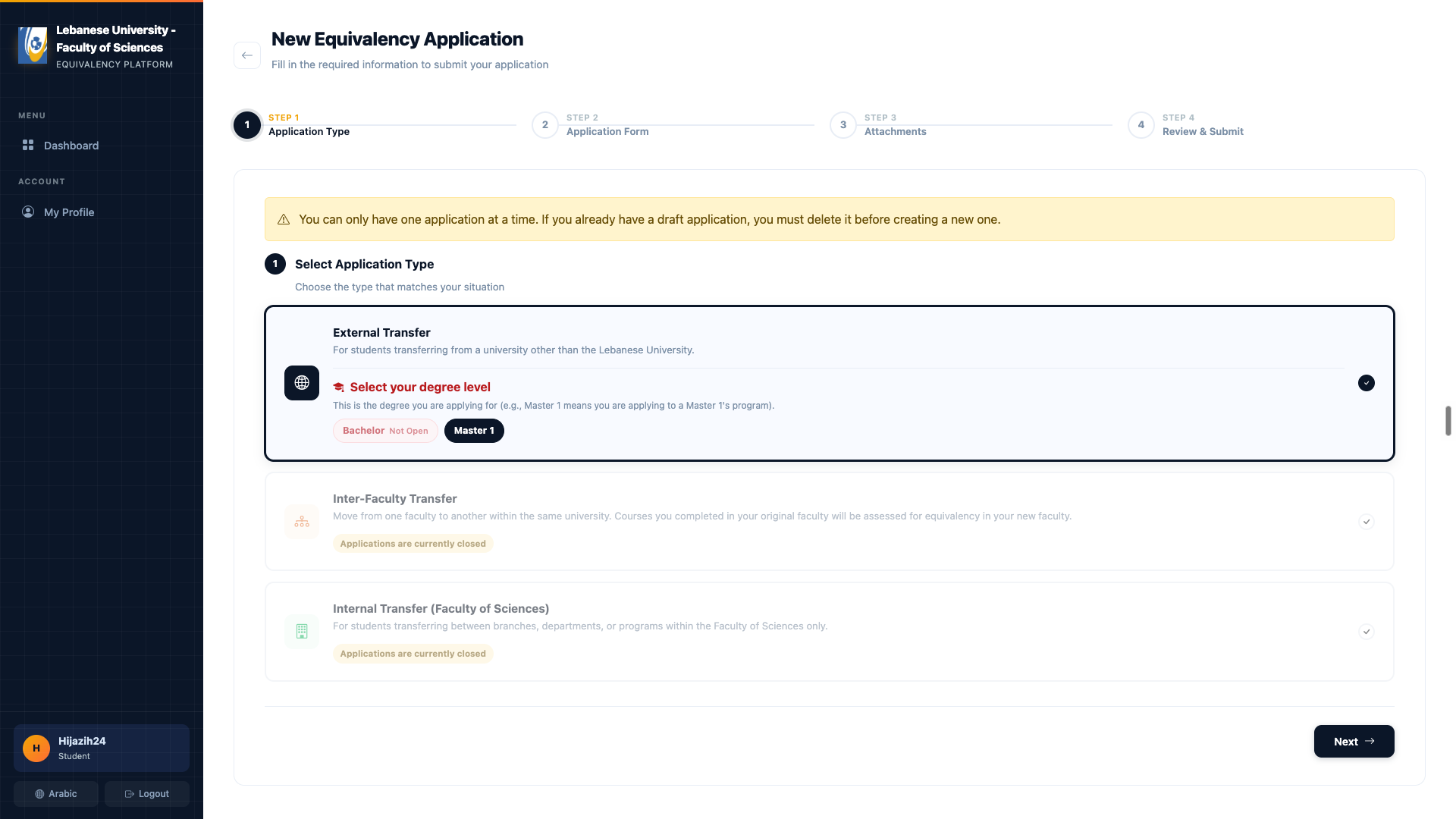
A full-stack ASP.NET application that manages student course equivalency requests at a university faculty. It covers internal, external and inter-faculty equivalencies, and deliberately keeps every decision manual: the software routes the paperwork and records who did what, rather than deciding outcomes on its own.
Each application moves through a fixed chain of custody. Students submit, employees triage and forward, a committee accepts, declines or returns the request, and a committee administrator finalises it and generates the decision document. Returns and declines require a written note before they can be saved.
Key Features:
- Draft and submission flow for student applications
- Employee triage and forwarding to the responsible committee
- Committee review with accept, decline and return-for-changes outcomes
- Mandatory justification notes on every negative or returned decision
- Committee administrator finalisation with generated PDF decisions
- Threaded comments alongside each application
- Complete audit trail covering every action and actor
- Role-based access separating students, employees, committees and administrators
Tech Stack:
- Backend: ASP.NET Core, C#, Entity Framework Core
- Frontend: Razor views, HTML5, CSS3, JavaScript
- Database: SQL Server
Built with a fellow student for the Applied Mathematics department. The system is proprietary and intended for internal use, so the repository stays private.