



5 min read
Awlak Benjah?: the app that tells you if you'll pass
Lebanese for "will I pass?", and the app answers it: credit-weighted averages, compensation and each year's verdict, worked out on your phone, offline and free. Here is what you get without an account, what a free account adds, and what Shatour is for.

Every exam season has the same scene. It is late, two courses have their results out and three do not, and you are on the back of a lecture handout working out whether a 46 in one course can be saved by a 71 in another. You weight by credits, get it slightly wrong, and start again. Then a friend sends a voice note: "awlak benjah?"
Awlak benjah? is Lebanese for "will I pass?", and it is the name of the app I have been building since July. You enter your grades out of 100 and it does the napkin math properly: the credit-weighted average of every semester, every year and the whole degree, the compensation rules, and a verdict you can trust. It is coming to iOS and Android, and this post is the tour.
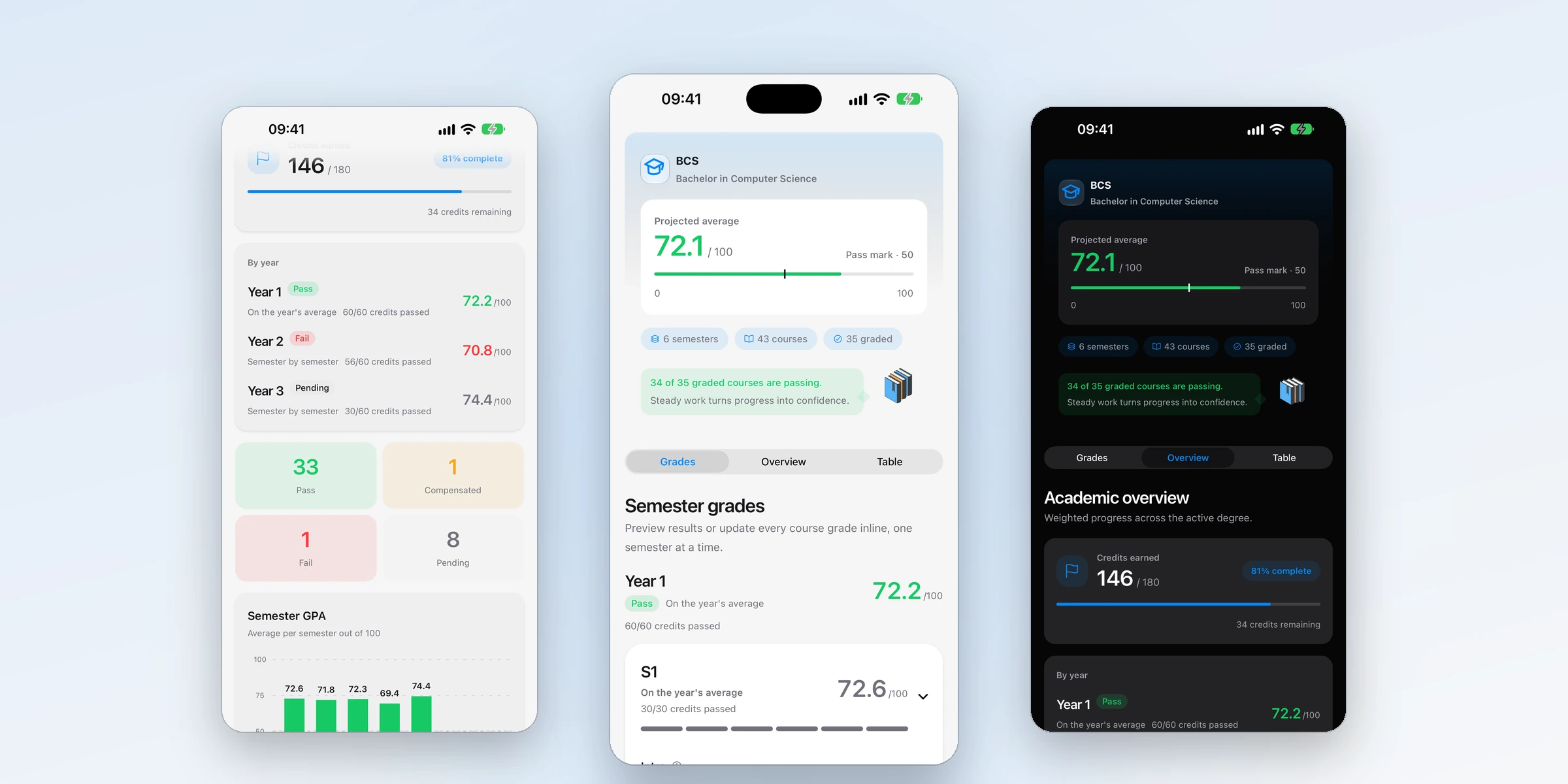
The math is harder than it looks
An average out of 100 is the easy part. The rules around it are where students lose sleep:
- A course passes at 50. A grade from 40 to 49 can still be compensated, but only when the semester average is at least 55 and the course credits add up to the semester's total.
- Some years are not judged semester by semester at all. They pass on the year's credit-weighted average: once it reaches 50, a course under 50 is compensated.
- One degree can mix both kinds of year.
Awlak Benjah? knows each year's rule and applies it as you type. A course under 50 in a year that is still undecided shows as pending, not failed, because that is what it is until the year is decided.
Free, no account: everything that answers "will I pass?"
This is the part I care about most, so nothing in it is metered: not degrees, not courses, not presets.
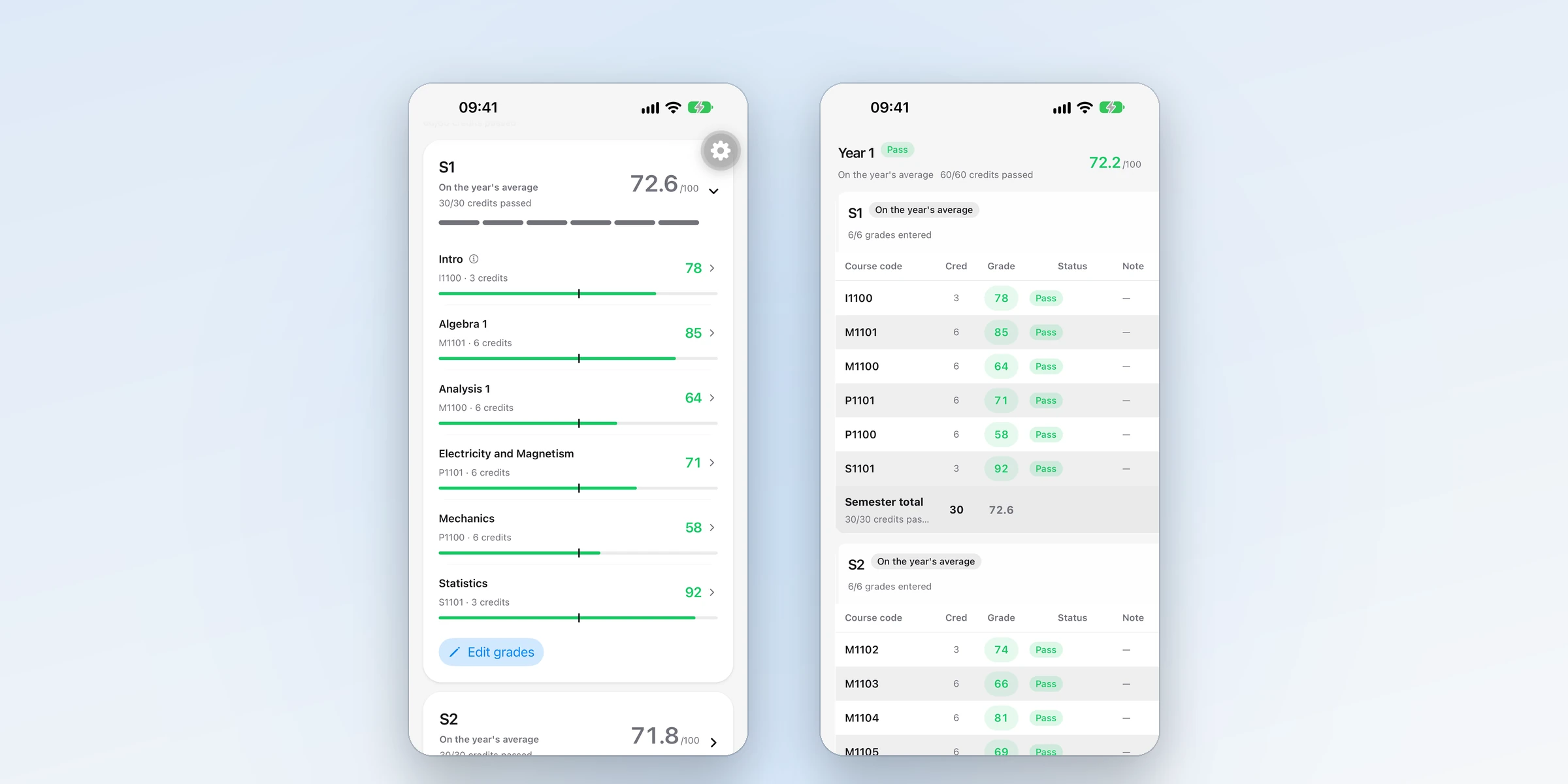
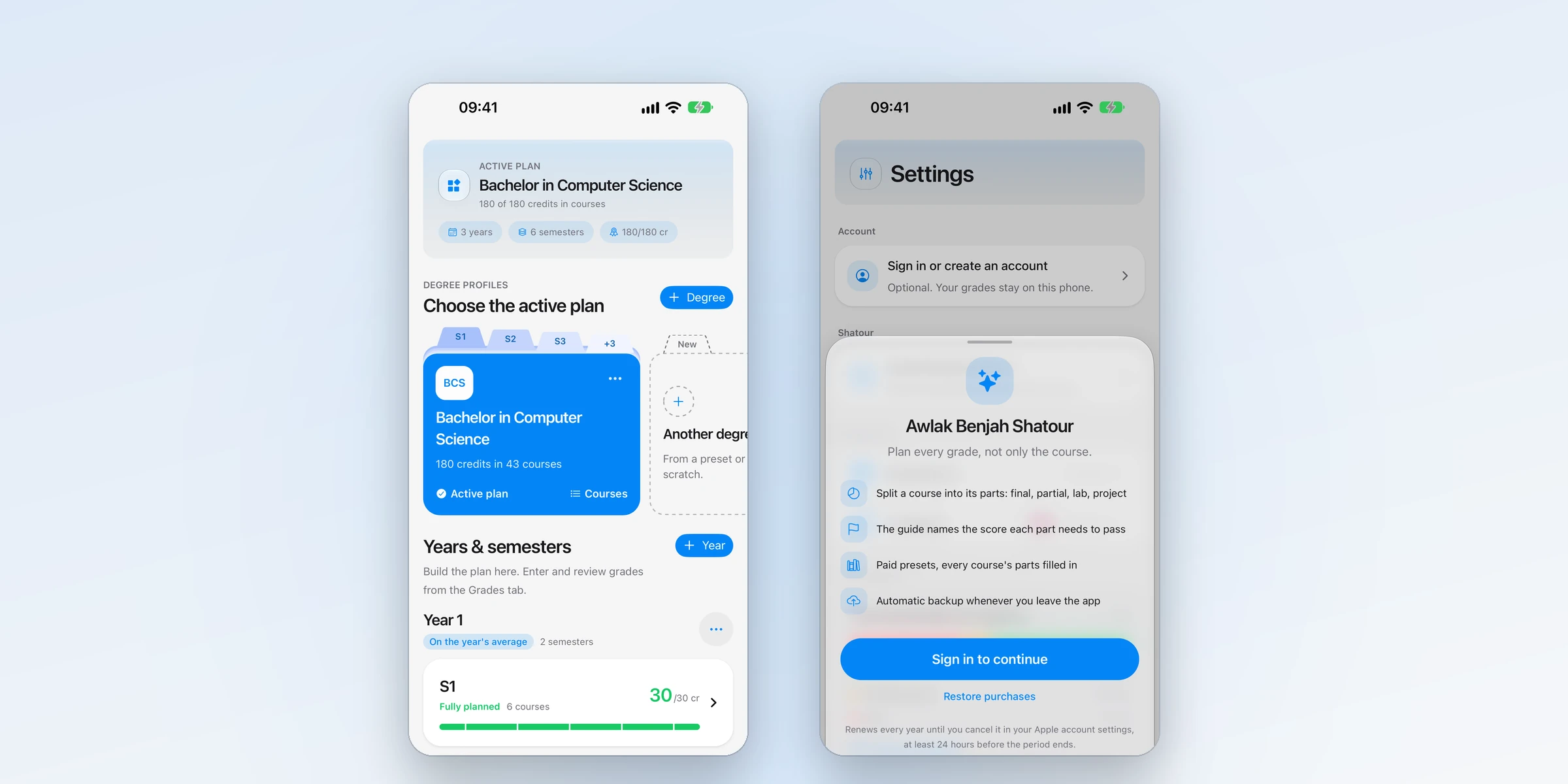
- Every degree is a folder. Years, semesters and courses with their credits, filed like a binder with a divider per semester. Start from a ready-made preset, like the Computer Science bachelor, or build your own, and keep several programs side by side.
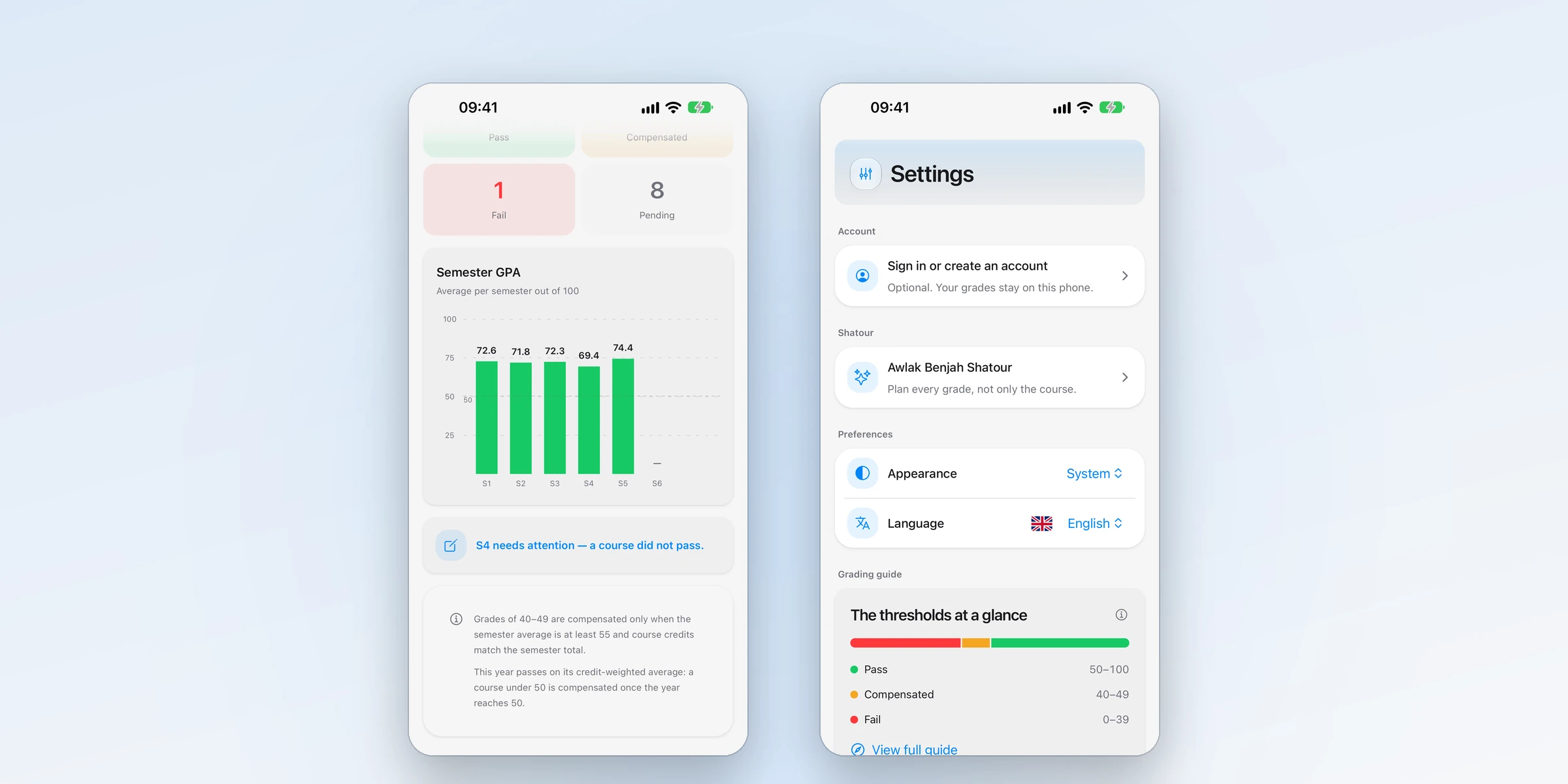
- Your average, worked out as you go. Enter a grade and the semester, year and degree averages update on the spot, measured against the pass mark.
- The passing guide. For every course still open, it tells you what you need in it to pass.
- The whole degree at a glance. Semester averages on a chart, credits earned against the total, and every result in one table: tap a course to edit it.
- A home screen widget with your average, for the weeks you cannot stop checking.
- English, French and Arabic. In Arabic, every screen reads right to left. Light and dark mode come with it.
- Offline. No account, no cloud, nothing to sync. Your grades stay on your phone.
A free account: the safety net
Phones get lost, stolen and dropped on the way to an exam. The account exists for that day, and it costs nothing.
- Back up now, from Settings, whenever you like.
- Restore from your account when you set up a new phone, and your degrees come back as you left them.
- Sign in with Apple, Google or email.
The app never asks you to sign in on its own. The account is there when you want it.
Shatour: for the students who plan every mark
Shatour (شطّور) is what Lebanese parents call the kid who finishes their homework before dinner. It is also the name of the paid tier, for students who want more than one grade per course:
- Split a course into its parts: final, partial, lab, project.
- The guide names the score each part needs. Not only "you need 58 in Mechanics", but what the final still has to bring after your partial.
- Paid presets, with every course's parts already filled in.
- Automatic backup whenever you leave the app.
It comes two ways:
| Plan | Price | |
|---|---|---|
| Shatour Yearly | $7.99 a year | renews every year until you cancel it |
| Shatour 3a Toul | $19.99, once | ع طول, Lebanese for "for good": the whole degree |
If you stop paying, nothing is taken from you. Your grades stay and keep counting, and a split course can always be folded back into one grade.
Side by side
| No account | Free account | Shatour | |
|---|---|---|---|
| Degrees, courses, averages, compensation, verdict | ✓ | ✓ | ✓ |
| Passing guide, chart, table, widget | ✓ | ✓ | ✓ |
| Presets | free ones | free ones | free and paid |
| Back up by hand, restore on a new phone | ✓ | ✓ | |
| Split a course into parts, with a guide per part | ✓ | ||
| Automatic backup | ✓ |
What it will never do
- Show you ads. An ad SDK means device identifiers leaving your phone and a tracking prompt. Not in this app.
- Track you. Your grades are nobody's business but yours.
- Hold your grades hostage. The whole "will I pass?" loop is free, and a lapsed Shatour keeps everything you made with it.
When can I get it?
Soon. Awlak Benjah? is coming to iOS and Android, and awlak-benjah.com will carry the store links the day it lands. Until then, if you know a rule your program uses that the app should learn, write to support@awlak-benjah.com. As the site puts it: grade us, we can take it.
So, awlak benjah? Soon your phone will tell you.